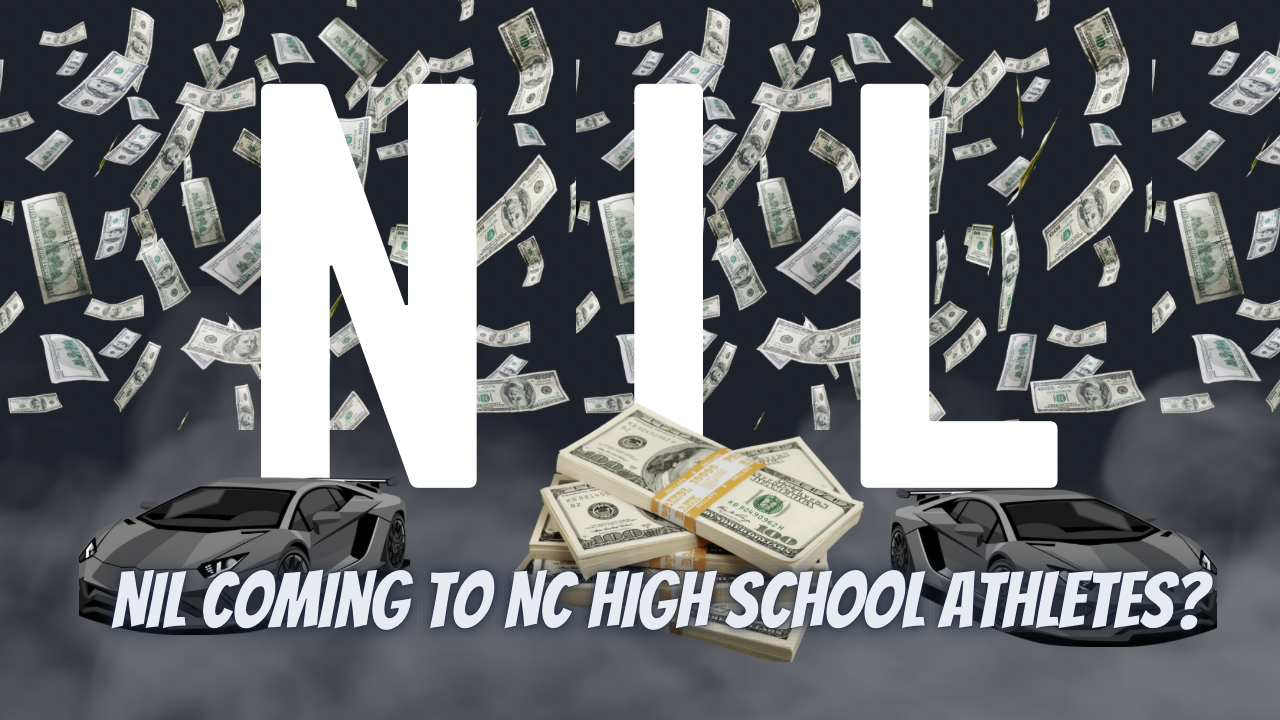
NIL Coming to NC High School Athletes?
High school student-athletes in North Carolina may soon be able to profit from their name, image, and likeness (NIL), as the N.C. High School Athletic Association (NCHSAA) Board of Directors is preparing to discuss a new proposal during their meeting this week. If the proposal gets the green light, the policy would take effect on July 1, 2023, opening up NIL opportunities for these young athletes.
The Policy Committee will deliberate on the proposal on Tuesday, with the voting process scheduled for Wednesday. If the policy is approved, the NCHSAA would need to revise its Amateur Rule to clarify that high school athletes are allowed to earn money in compliance with the newly established NIL policy.
The proposed policy would enable student-athletes to capitalize on their NIL through various channels, such as appearances, athlete-owned brands, autographs, camps and clinics, group licensing, in-kind deals, instruction, non-fungible tokens, product endorsements, promotional activities, and social media. However, certain restrictions apply to the types of products and affiliations that athletes can engage with. For instance, associations with adult entertainment, alcohol, cannabis, controlled substances, firearms and ammunition, gambling, prescription drugs, and tobacco, vaping, or other nicotine-related products are not allowed under the NCHSAA guidelines. Moreover, athletes cannot affiliate themselves with specific schools, conferences, school districts, the NCHSAA, the NFHS, or activities that would interrupt the academic school day.
The proposal also prohibits school personnel, such as coaches, from utilizing NIL for recruitment and enrollment purposes. They are also barred from facilitating NIL deals or acting as a student’s agent or marketing representative.
To ensure adherence to the rules, student-athletes, parents or legal guardians, coaches, athletic directors, and principals would be required to complete the NFHS Name, Image, and Likeness Course annually. Furthermore, students must disclose NIL agreements to their coach and athletic director, who must then report the disclosures to the NCHSAA. Violating these rules would result in a 60-calendar-day ineligibility period for the student-athlete.
At present, 27 of the 51 state associations permit high school athletes to profit from their NIL. Among North Carolina’s neighboring states, only Tennessee has such a policy in place. NIL became legal for college athletes in July 2021 after the NCAA amended its amateur rules. Since then, over half of the state associations have allowed high school athletes to profit from their NIL.